Every strong building starts with properly prepared land. Before workers pour a foundation, install a driveway, or build a parking lot, the ground must be shaped and leveled. This process is called site grading. Professional site grading in Baton Rouge helps create a stable building area and directs rainwater away from structures. Without it, a property may face standing water, soil movement, foundation damage, and costly repairs.
What Is Site Grading?
Site grading is the process of shaping the ground for a construction project. Workers move soil from high areas to low areas and create the right slope across the property. They may remove weak soil, add fill material, or compact the ground to make it stronger.
The goal is not always to make the entire lot perfectly flat. Most properties need a slight slope so water can flow away from the building. The finished grade must match the plans for the foundation, roads, parking lots, sidewalks, drainage systems, and landscaping.
Why Does a Level Building Area Matter?
A foundation carries the weight of the entire building. If the ground below it is uneven or weak, one section may settle faster than another. This movement can place pressure on the foundation and lead to cracks, uneven floors, sticking doors, and damaged walls.
A properly graded and compacted building pad gives the foundation a firm surface. It spreads the building’s weight more evenly and lowers the chance of future movement. Good soil preparation is needed for homes, offices, warehouses, stores, and industrial buildings.
Even a small grading error can become a larger problem after construction. Correcting the land before the foundation is poured is often easier than repairing a damaged building later.
How Baton Rouge Soil Affects Construction
Soil conditions can change from one property to another in Baton Rouge. Some areas contain soft or wet soil that may not hold heavy structures well. Clay-rich soil can also expand when it absorbs water and shrink when it dries. This repeated movement can place stress on concrete slabs and foundations.
Heavy rain can make these problems worse. Water may soften the soil below a building or wash loose material away. Before grading begins, the site should be checked for weak areas, old debris, tree roots, and soil that may need to be removed.
Professional site grading in Baton Rouge may include adding stable fill, compacting the soil in layers, and shaping the land based on the planned use. Proper preparation gives builders a safer and more dependable place to begin their work.
How Grading Helps Control Rainwater
Baton Rouge receives frequent and sometimes heavy rain. If a property does not have the right slope, water can collect around the foundation. Over time, this moisture may weaken the soil, damage concrete, enter a crawl space, or cause erosion.
Drainage grading directs water toward a safe outlet and away from buildings. The plan may include swales, ditches, drains, culverts, curbs, or gutters. Parking lots and paved areas also need the correct slope so water does not collect where people walk or drive.
A level building pad and a properly sloped yard work together. The pad supports the structure, while the surrounding grade moves water away from it.
What Happens During the Site Grading Process?
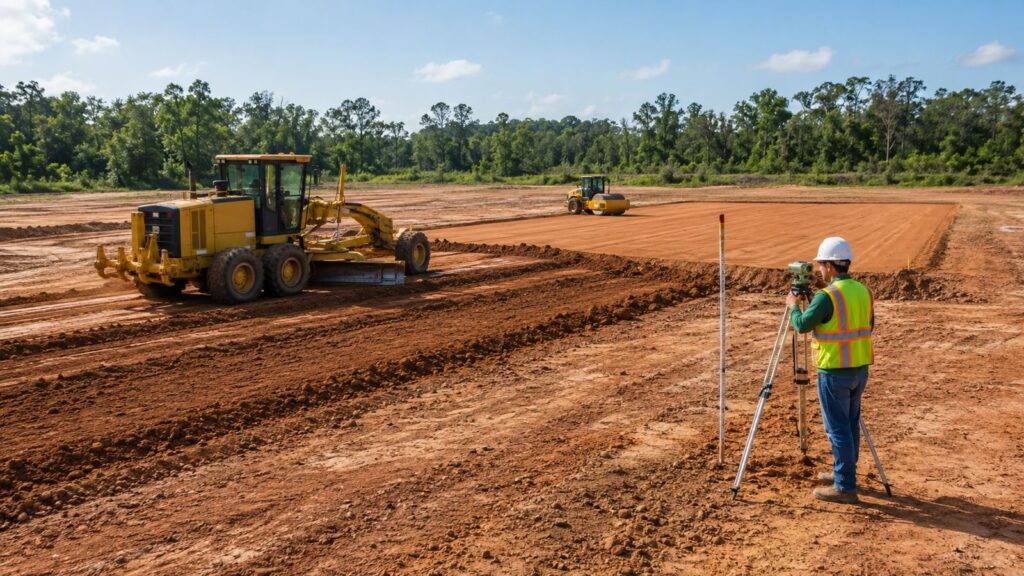
The process often begins with land clearing. Trees, brush, roots, old pavement, and debris may need to be removed. The crew then performs excavation to reach the planned depth and shape of the property.
Soil is moved across the site with excavators, bulldozers, and other heavy equipment. Fill material may be added where the ground is too low. The soil is then pressed down with compaction equipment to reduce loose spaces and create a firm base.
Workers check the height and slope throughout the project. Once the correct grade is reached, the land can be prepared for the foundation, concrete paving, utility installation, drainage work, or landscaping.
What Can Happen When a Site Is Graded Poorly?
Poor grading can cause problems across the entire property. Water may flow toward the building instead of away from it. Driveways and parking lots may develop low spots, cracks, or sinking sections. Soil may also wash away from sidewalks, foundations, and drainage areas.
Inside the building, owners may notice cracked walls, uneven floors, moisture, or doors that no longer close properly. Some problems appear soon after construction, while others develop slowly over several years.
Fixing poor grading after a building is complete can require excavation, drainage changes, concrete removal, or foundation repair. Starting with professional ground preparation can lower the chance of these issues.
Start Your Baton Rouge Project on Stable Ground
Proper grading supports the foundation and helps protect the full property from water and soil movement. The work must match the land, drainage needs, building plans, and expected traffic. It is a key step for residential, commercial, and industrial development.
Cypressline Services provides professional site grading in Baton Rouge, along with excavation, land clearing, drainage improvements, site preparation, demolition, and concrete paving. Our team uses the right equipment to shape, level, and prepare land for new construction. Contact Cypressline Services today to request a free estimate and build your project on properly prepared ground.